
Cómo MCP Transforma la Automatización Industrial
31 de marzo de 2025Alex @puppyone
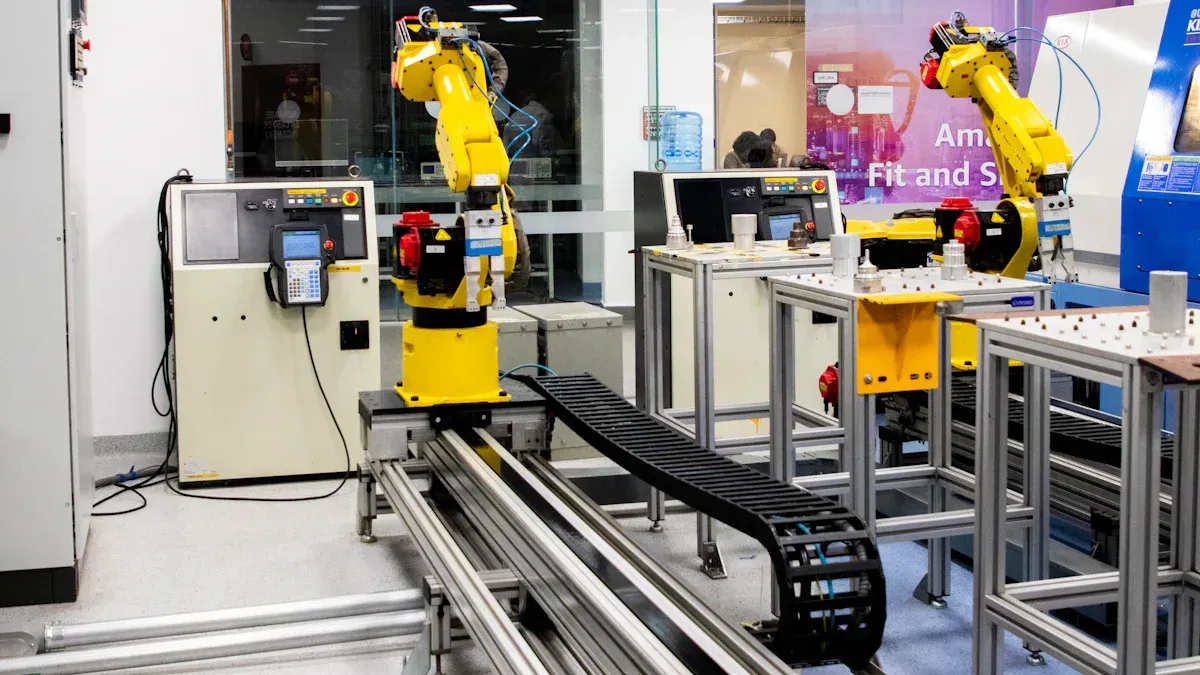 Fuente de la Imagen: pexels
MCP, abreviatura de Protocolo de Contexto de Modelo y Panel de Control de Motores, desempeña un doble papel en la automatización industrial. Combina protocolos de comunicación avanzados con sistemas de control de motores para optimizar las operaciones. Puedes pensarlo como el cerebro y sistema nervioso de los procesos automatizados, asegurando que todo funcione en armonía.
Al integrar sistemas de IA, MCP permite una toma de decisiones más inteligente. Optimiza el control de motores, reduciendo el desperdicio de energía y mejorando la precisión. Esta innovación transforma la automatización industrial al impulsar la eficiencia, mejorar la seguridad y habilitar la escalabilidad. MCP en Automatización Industrial: Aplicaciones del Mundo Real demuestra cómo las industrias logran estos beneficios en la práctica.
Puntos Clave
- MCP usa IA con control de motores para mejorar la eficiencia y las decisiones.
- El control central de MCP facilita las tareas, reduce errores y ayuda a seguir las reglas.
- MCP procesa datos rápidamente, ayudando a tomar mejores decisiones y mantenerse flexible.
- Las herramientas de seguridad de MCP reducen riesgos y mantienen la estabilidad durante problemas.
- Usar MCP ahorra dinero al hacer el trabajo más fluido y necesitar menos reparaciones.
¿Qué es MCP?
Definición de MCP: Protocolo de Contexto de Modelo y Panel de Control de Motores
MCP significa Protocolo de Contexto de Modelo y Panel de Control de Motores. Sirve como un sistema de doble propósito en la automatización industrial. Por un lado, actúa como un protocolo de comunicación que permite la integración perfecta entre sistemas de IA y herramientas externas. Por otro lado, funciona como un panel de control de motores, asegurando la operación precisa y eficiente de la maquinaria. Esta combinación permite a MCP cerrar la brecha entre tecnologías avanzadas y procesos industriales tradicionales.
Las características distintivas de MCP incluyen su capacidad para integrar IA con sistemas externos, habilitando inteligencia en tiempo real y toma de decisiones basada en datos. Por ejemplo, en industrias como salud y finanzas, MCP facilita interacciones seguras con datos sensibles, como registros electrónicos de salud o bases de datos financieras. Esta capacidad destaca su versatilidad y potencial transformador en varios sectores.
Visión General del Papel de MCP en la Automatización Industrial
MCP desempeña un papel crítico en la automatización industrial moderna. Mejora la integración proporcionando herramientas que apoyan acciones impulsadas por IA dentro de sistemas conectados. Esto mejora la eficiencia operacional ofreciendo acceso estructurado a información contextual crítica. Adicionalmente, MCP apoya la comunicación en tiempo real, que es esencial para entornos industriales de ritmo acelerado.
El sistema también incluye componentes como servicios de directorio y mecanismos de seguridad. Estos aseguran integración robusta y segura, habilitando respuestas de IA consistentes y compatibles. Al transformar flujos de datos fragmentados en inteligencia optimizada, MCP mejora la toma de decisiones y la precisión operacional.
Diferencias Clave Entre MCP y Sistemas Tradicionales
MCP ofrece varias ventajas sobre los sistemas de automatización industrial tradicionales. Su protocolo universal simplifica la integración, reduciendo el tiempo de configuración y los esfuerzos de mantenimiento. Los sistemas tradicionales, en contraste, a menudo dependen de integraciones fragmentadas que complican estos procesos. MCP también habilita comunicación persistente y bidireccional, permitiendo acciones en tiempo real. Los sistemas tradicionales carecen de esta capacidad, lo que limita su capacidad de respuesta.
Otra diferencia clave radica en la gestión de contexto. MCP incluye manejo contextual integrado, habilitando interacciones coherentes a través de fuentes de datos. Los sistemas tradicionales requieren reconfiguración manual para la gestión de contexto, lo que puede ser consumir tiempo. Adicionalmente, MCP emplea un enfoque de seguridad estandarizado, reduciendo vulnerabilidades y asegurando el cumplimiento. Los sistemas tradicionales a menudo tienen medidas de seguridad inconsistentes, aumentando los riesgos.
| Feature | MCP Benefits | Traditional Systems Limitations |
|---|---|---|
| Integration Methods | Universal protocol simplifies integration, reducing setup and maintenance. | Fragmented integrations complicate setup and ongoing maintenance. |
| Communication Capabilities | Persistent, bidirectional communication enables real-time actions. | Limited communication capabilities hinder responsiveness. |
| Context Management | Built-in contextual handling allows coherent interactions across data sources. | Manual reconfiguration required for context management. |
| Security | Standardized security approach reduces vulnerabilities and ensures compliance. | Inconsistent security measures increase risks. |
Al abordar estas limitaciones, MCP transforma la automatización industrial, haciéndola más eficiente, segura y escalable. Esto es evidente en MCP en Automatización Industrial: Aplicaciones del Mundo Real, donde las industrias aprovechan sus capacidades para optimizar procesos.
El Papel de MCP en la Automatización Industrial
 Fuente de la Imagen: pexels
Control y Monitoreo Centralizados
MCP centraliza el control y monitoreo, haciendo los procesos industriales más eficientes y seguros. Puedes gestionar operaciones desde una sola plataforma, lo que simplifica la supervisión y reduce errores. Este enfoque centralizado mejora la gestión de cumplimiento proporcionando herramientas para auditoría y monitoreo. Asegura transparencia y responsabilidad, especialmente en industrias reguladas. Las herramientas de registro integradas también te ayudan a gestionar riesgos de manera proactiva.
MCP actúa como un guardabarreras canalizando el acceso a datos a través de un solo protocolo. Esto simplifica el monitoreo y hace cumplir políticas de acceso estrictas. Los requisitos de autenticación aseguran que solo usuarios autorizados puedan interactuar con el sistema. Adicionalmente, un pipeline estandarizado facilita el registro y auditoría de interacciones, dándote una vista clara de las actividades del sistema.
Integración con IA e IoT Industrial (IIoT)
MCP se integra perfectamente con IA e IoT Industrial, habilitando automatización más inteligente. Conecta sistemas de IA con dispositivos industriales, permitiendo intercambio de datos en tiempo real. Esta integración apoya modelado predictivo, automatización de flujos de trabajo y manejo seguro de datos. Por ejemplo, los modelos de IA pueden consultar bases de datos en tiempo real, mejorando la precisión de la toma de decisiones. MCP también mejora el desarrollo de software asistiendo en depuración y modificación de código.
| Application Area | Description |
|---|---|
| Software Development & AI Coding | MCP-integrated tools assist in code modification and debugging, enhancing software development. |
| Data Science and Analytics | AI models can securely query databases and benefit from real-time data retrieval for predictive modeling. |
| Automation & AI Agents | AI Agents can automate workflows, such as retrieving records and analyzing data. |
| Web & Browser Automation | MCP-compatible tools streamline web scraping and search automation. |
| Cybersecurity & Compliance | MCP ensures safe AI interactions with sensitive data through strict authentication and encryption. |
This integration transforms how you manage industrial systems, making them more intelligent and adaptive.
Enhancing Real-Time Context Sharing and Persistent Memory
MCP improves real-time context sharing, allowing systems to adapt to changing conditions. It enables AI-driven platforms to predict user intent and adjust workflows based on behavior. For example, MCP can streamline the flow of contextual information to AI models, ensuring responses remain relevant. This capability enhances the efficiency of automated processes.
Persistent memory is another key feature. MCP allows APIs to learn user preferences over time. This helps systems proactively suggest options tailored to your needs. By combining real-time context sharing with persistent memory, MCP creates a smarter and more responsive industrial environment.
MCP in Industrial Automation: Real-World Applications demonstrates how these features optimize processes and improve outcomes across industries.
Características y Funcionalidades Clave de MCP
Procesamiento de Datos en Tiempo Real y Toma de Decisiones
MCP excels in real-time data processing, enabling you to make faster and more accurate decisions. It democratizes data analytics, allowing even non-technical users to query enterprise data intuitively. This accessibility improves business agility and decision-making capabilities. For example, MCP integrates seamlessly with AI systems to analyze data streams and provide actionable insights instantly.
| Evidence Type | Description |
|---|---|
| Increased Data Accessibility | Democratization of data analytics allowed non-technical users to directly query enterprise data intuitively. |
| Faster Decision-making | Rapid and intuitive access to insights improved business agility and decision-making capabilities. |
By eliminating the need for bespoke integrations, MCP reduces development costs and accelerates deployment cycles. This efficiency ensures that your industrial systems remain adaptive and responsive to changing conditions.
Interfaces Personalizables para Operadores
MCP offers customizable interfaces that empower operators to tailor the system to their specific needs. You can adjust dashboards, workflows, and control panels to match your operational requirements. This flexibility enhances usability and ensures that operators can focus on critical tasks without distractions.
The system also simplifies interactions between AI models and external tools. It categorizes core components like tools, resources, and security, making integration straightforward. These features ensure that operators can work efficiently while maintaining high levels of security and governance.
- MCP standardizes interactions between AI models and various services.
- It details the roles of hosts, clients, servers, tools, and resources.
- The guide emphasizes security and governance aspects of MCP.
This adaptability makes MCP a valuable asset in dynamic industrial environments.
Compatibility with Advanced Automation Technologies
MCP ensures compatibility with advanced automation technologies, streamlining processes such as database queries, document retrieval, and AI-driven analysis. You can automate tasks like email notifications and financial data analysis without manual intervention. This capability saves time and reduces errors.
- MCP enables automation of processes like database queries and document retrieval.
- Standardized API access eliminates the need for custom integrations.
- Secure data handling protects sensitive information.
- Seamless AI integration allows dynamic tool selection for tasks.
Its interoperability ensures that MCP works with multiple enterprise systems, making it a cornerstone of modern industrial automation. MCP in Industrial Automation: Real-World Applications highlights how industries leverage these features to optimize operations.
Built-in Safety and Redundancy Mechanisms
Safety and reliability are critical in industrial automation, and MCP addresses these needs with built-in safety and redundancy mechanisms. These features ensure that your systems remain operational even during unexpected failures or disruptions.
MCP includes multiple layers of safety protocols. For example, it monitors system performance in real time and detects anomalies before they escalate into major issues. If a motor or device malfunctions, MCP automatically isolates the problem area to prevent further damage. This proactive approach minimizes downtime and protects your equipment.
Tip: Regularly updating your MCP system ensures that safety protocols stay effective against evolving risks.
Redundancy mechanisms in MCP provide an additional layer of reliability. The system uses backup components and parallel processes to maintain operations during hardware or software failures. For instance, if one control unit fails, a secondary unit takes over instantly. This seamless transition keeps your production line running without interruptions.
Here are some key safety and redundancy features MCP offers:
- Fail-Safe Operations: MCP ensures that machinery shuts down safely during critical failures.
- Backup Power Systems: Redundant power supplies prevent outages from halting operations.
- Error Logging: The system records errors for quick diagnosis and resolution.
- Self-Diagnostics: MCP continuously checks its components for potential issues.
These features not only enhance safety but also improve efficiency. You can focus on optimizing processes without worrying about unexpected breakdowns. MCP's robust design ensures that your industrial systems remain secure, reliable, and ready for future challenges.
With MCP, you gain peace of mind knowing that your automation systems are equipped to handle the unexpected.
Beneficios de MCP en Automatización Industrial
Eficiencia Operacional y Precisión Mejoradas
MCP significantly enhances operational efficiency and accuracy by streamlining processes and reducing manual interventions. Its ability to integrate multiple operating systems on a single controller allows you to handle real-time and general-purpose tasks simultaneously. This reduces the need for separate devices, cutting costs and simplifying system designs.
| Benefit | Description |
|---|---|
| Reduced Integration Costs | Lowers development effort and costs by eliminating bespoke integrations. |
| Faster Development Cycles | Accelerates integration of new AI capabilities and backend systems. |
| Improved Agent Efficiency | Provides agents with a unified view of customer information, reducing search time. |
| Enhanced Scalability | Simplifies scaling AI deployments and adapting to business needs. |
| Improved Developer Productivity | Reduces time spent on manual integrations, enhancing real-time coding support. |
By automating workflows and enabling faster decision-making, MCP ensures that your industrial systems remain agile and responsive to changing demands.
Seguridad Mejorada y Mitigación de Riesgos
Safety is a cornerstone of MCP's design. It incorporates robust authentication protocols like OAuth 2.0 and end-to-end encryption to secure data during transmission and storage. Fine-grained access control ensures that only authorized personnel can access sensitive systems, reducing the risk of breaches.
| Security Feature | Description |
|---|---|
| Robust Authentication and Authorization | Utilizes protocols like OAuth 2.0 to ensure only authorized AI agents can access resources. |
| End-to-End Encryption | Secures communication using TLS, protecting data in transit and at rest from breaches. |
| Fine-Grained Access Control | Implements RBAC or ABAC to limit access based on roles, minimizing overprivileged access risks. |
| Proactive Security Measures | Involves regular audits and testing to identify and mitigate vulnerabilities before exploitation. |
These features not only protect your operations but also ensure compliance with industry standards. MCP's proactive security measures, such as regular audits, help you identify and address vulnerabilities before they become critical issues.
Escalabilidad para Crecimiento Futuro e Industria 4.0
MCP is built to support your growth in the era of Industry 4.0. Its ability to integrate with AI and IoT systems makes it a key enabler for smart factories and advanced automation. For example, MCP allows AI assistants to perform complex tasks by connecting with external tools, enhancing operational efficiency.
- AI agents in software development can manage GitHub repositories in real time.
- MCP facilitates automated financial reporting by integrating with financial databases.
- Tools like Speakeasy's OpenAPI-to-MCP generator have reduced conversion times from weeks to just two days.
In healthcare, MCP enables secure interactions with electronic health records, improving clinical decision-making. Its scalability ensures that your systems can adapt to future demands, making it a vital component of Industry 4.0 ecosystems. MCP in Industrial Automation: Real-World Applications showcases how industries leverage these capabilities to stay competitive.
Ahorro de Costos a través de Automatización Optimizada
Streamlined automation with MCP delivers significant cost savings across various areas of industrial operations. By centralizing processes and reducing manual interventions, you can achieve better efficiency while cutting unnecessary expenses.
One of the most notable benefits is the reduction in maintenance costs. MCP's centralized integration minimizes the need for ongoing maintenance compared to traditional systems. This means fewer resources spent on troubleshooting and repairs. Additionally, automated workflows save time by reducing manual administrative tasks. You can reallocate this saved time to focus on more strategic activities, boosting overall productivity.
MCP also enhances customer experiences by enabling context-rich AI responses. When customers receive faster and more accurate support, their satisfaction improves. This reduces the workload on human support teams, lowering support costs and improving operational efficiency. Furthermore, MCP eliminates the need for bespoke integrations, which often require significant development effort. By using MCP's standardized protocols, you can connect AI tools seamlessly, saving both time and money.
The table below highlights the key cost-saving categories associated with MCP:
| Cost Savings Category | Description |
|---|---|
| Reduced Maintenance Costs | Centralized MCP integration lowered ongoing maintenance requirements compared to traditional APIs. |
| Significant Time Savings | Automated workflows reduced manual administrative overhead substantially. |
| Improved Customer Experiences | Context-rich AI responses significantly improved customer satisfaction. |
| Reduced Support Costs | AI-driven automation reduced the workload on human support teams, improving efficiency. |
| Reduced Integration Costs | Eliminated bespoke integrations, lowering development effort and costs for connecting AI tools. |
| Faster Development Cycles | New AI capabilities can be integrated much faster with MCP, focusing on deployment and configuration. |
By adopting MCP, you not only reduce costs but also position your operations for long-term growth. These savings allow you to reinvest in innovation, ensuring your systems remain competitive in an ever-evolving industrial landscape.
MCP en Automatización Industrial: Aplicaciones del Mundo Real
Casos de Uso en Manufactura y Líneas de Producción
MCP in Industrial Automation: Real-World Applications demonstrates its value in manufacturing and production lines. You can use MCP to streamline assembly processes by integrating motor control with AI-driven systems. For example, MCP enables real-time adjustments to conveyor speeds based on production demands. This ensures that your operations remain efficient and adaptable.
MCP also enhances quality control. By connecting sensors and cameras to the system, you can automate defect detection. The system identifies issues instantly and adjusts machinery to prevent further errors. This reduces waste and improves product consistency. Additionally, MCP supports predictive maintenance. It monitors equipment performance and alerts you before failures occur, minimizing downtime.
Tip: Implementing MCP in your production line can reduce operational costs and improve output quality.
Aplicaciones en Energía, Servicios Públicos y Redes Inteligentes
In energy and utilities, MCP in Industrial Automation: Real-World Applications plays a critical role. It optimizes energy distribution by integrating with smart grids. You can use MCP to monitor energy usage in real time and adjust supply based on demand. This reduces energy waste and ensures a stable power supply.
MCP also supports renewable energy systems. For instance, it can manage wind turbines and solar panels by adjusting their output to match grid requirements. This ensures efficient energy utilization. Furthermore, MCP enhances grid security. It detects anomalies in energy flow and isolates affected areas to prevent widespread outages.
| Application Area | Benefit |
|---|---|
| Energy Distribution | Real-time monitoring reduces waste and ensures stable supply. |
| Renewable Energy | Optimized management of wind and solar systems improves efficiency. |
| Grid Security | Anomaly detection prevents outages and enhances reliability. |
Papel en Fábricas Inteligentes y Ecosistemas de Industria 4.0
MCP in Industrial Automation: Real-World Applications is a cornerstone of smart factories and Industry 4.0. It connects AI, IoT devices, and machinery to create a fully automated ecosystem. You can use MCP to synchronize operations across your factory, ensuring seamless communication between systems.
For example, MCP enables autonomous robots to collaborate with human workers. It provides real-time data to guide robots, improving efficiency and safety. MCP also supports advanced analytics. By collecting and processing data from IoT devices, it helps you identify trends and optimize workflows. This makes your factory more adaptive and competitive in the Industry 4.0 landscape.
With MCP, you can transform your factory into a smart, efficient, and future-ready operation.
MCP stands out as a game-changer in modern industrial automation. Its ability to integrate AI systems and optimize motor control transforms how you manage operations. By centralizing processes and enabling real-time decision-making, MCP enhances efficiency, safety, and scalability.
Its impact spans multiple industries, as shown below:
| Application Area | Benefits | Impact on Efficiency |
|---|---|---|
| Software Development | Reduced integration complexity | Enhanced development speed |
| Customer Support | Improved customer experience | Higher satisfaction rates |
| Finance | Streamlined operations and decision-making | Increased productivity |
| Healthcare | Enhanced data management and patient care | Better health outcomes |
| Legal Compliance | Simplified compliance processes | Reduced risk of non-compliance |
| Supply Chain Logistics | Optimized logistics and inventory management | Cost savings and improved delivery times |
Looking ahead, MCP holds the potential to redefine industrial processes. Its adaptability ensures you can meet the demands of Industry 4.0 while staying competitive in a rapidly evolving landscape.
Preguntas Frecuentes
What industries benefit the most from MCP?
Industries like manufacturing, energy, healthcare, and logistics gain the most from MCP. It improves efficiency, enhances safety, and supports scalability. For example, MCP optimizes production lines, manages smart grids, and ensures secure data handling in healthcare systems.
How does MCP improve safety in industrial automation?
MCP includes built-in safety protocols like fail-safe operations, error logging, and self-diagnostics. These features detect issues early, isolate problems, and prevent system-wide failures. You can rely on MCP to minimize risks and maintain operational stability.
Is MCP compatible with existing industrial systems?
Yes, MCP integrates seamlessly with most existing systems. Its standardized protocols eliminate the need for custom integrations. This compatibility ensures you can upgrade your automation processes without overhauling your current infrastructure.
Can MCP reduce operational costs?
Absolutely! MCP reduces costs by automating workflows, minimizing maintenance, and eliminating the need for bespoke integrations. It also improves efficiency, saving time and resources. These benefits allow you to allocate funds toward innovation and growth.
How does MCP support Industry 4.0 initiatives?
MCP connects AI, IoT devices, and machinery to create smart factories. It enables real-time data sharing, predictive maintenance, and advanced analytics. These capabilities help you adapt to Industry 4.0 demands and stay competitive in a rapidly evolving market.