
AI Governance for Agents: Why Business Context and Contextual Intelligence Matter
April 14, 2026Lin Ivan
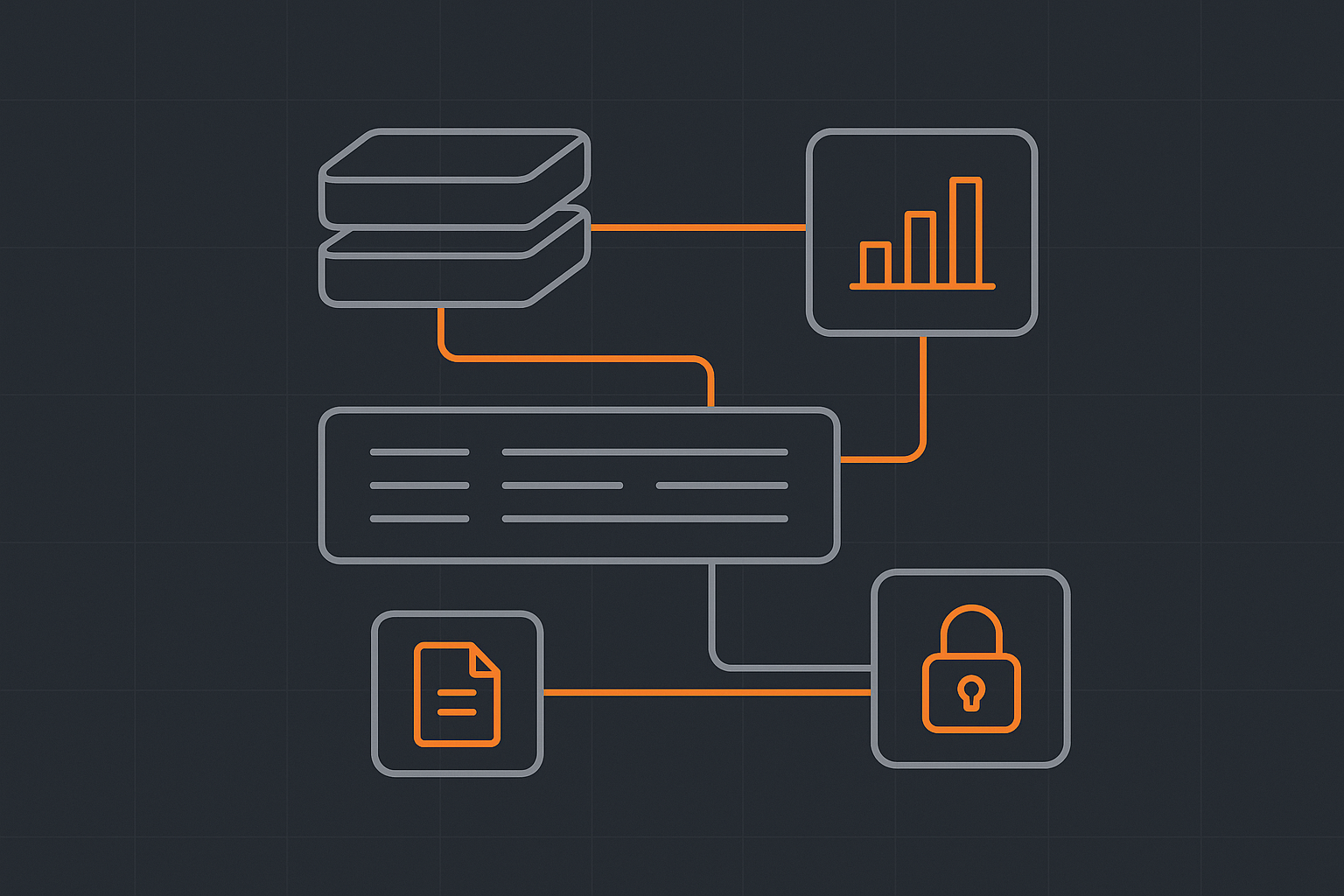
Most agent failures in production are not caused by the model being "not smart enough." They happen because the system around the model cannot deliver the right context, at the right time, with the right boundaries.
That is why AI governance for agentic systems is no longer just a model-policy conversation. Once an agent can read internal knowledge, call tools, and trigger downstream actions, context becomes a governance surface. It determines what the agent knows, what it is allowed to rely on, what it is allowed to do, and what your team can later prove happened.
If your agent does not understand the business rule behind a task, the trust level of the source it retrieved, or the approval boundary around a tool call, it may still produce fluent answers while making unsafe decisions.
Key takeaways
- Governance for AI agents is not only about model choice. It is about controlling context, permissions, and execution paths.
- Business context is what keeps an agent from being technically plausible but operationally wrong.
- Contextual intelligence becomes real when a system can select context, interpret it under business rules, act within policy boundaries, and reproduce why a decision happened.
- A useful governance model separates context into four layers: business, operational, policy or authorization, and provenance or freshness.
- Start with a small control set that actually changes runtime behavior: least privilege, trust labels, audit logs, versioning, and action gating.
The real governance surface is larger than the model
Many teams still approach AI governance through the lens of model selection, eval scores, and prompt safety. Those are necessary, but they are no longer sufficient once agents operate against real systems.
In an agentic workflow, the larger risk is often the path around the model:
- the agent reads stale or conflicting policy text
- the agent sees data it should not have access to
- the agent can call a tool that should have required approval
- the system cannot reconstruct which context bundle shaped the final action
That is why governance has to cover both the context plane and the execution plane.
This framing lines up with the NIST AI Risk Management Framework, which treats governance as an organizational and lifecycle concern rather than a last-minute wrapper. In practice, that means the question is not only "Is the model aligned?" but also "Did the workflow supply appropriate evidence, enforce policy at runtime, and leave an auditable trail?"
Business context is what keeps an agent from being technically right and operationally wrong
When people say an agent needs context, they often mean retrieval results, chat history, or memory. That is too narrow.
Business context is the operating frame around the task:
- what outcome the user is actually trying to achieve
- which policy or playbook applies
- what counts as a valid answer
- which exceptions require approval
- which failure modes matter more than speed
Without business context, an agent can still look capable while making the wrong operational move.
Consider a support workflow. An agent may retrieve the latest refund policy and summarize it correctly. But if it does not know that enterprise customers require manual approval above a threshold, or that disputed invoices must route to finance instead of support, the answer is not governed. It is merely well-worded.
For agents, contextual intelligence means the system can:
- select the right context for the task
- interpret that context under the right business rules
- constrain actions based on policy and permissions
- explain which evidence supported the final decision
That definition is close to the practical spirit of context engineering discussed in Anthropic's work on effective context engineering for AI agents: the hard problem is not stuffing more tokens into a window, but deciding what information and tools should shape the model at runtime.
A practical taxonomy of context to govern
Treating all context as one blob leads to weak controls. A better approach is to govern different context types differently.
| Context type | What it contains | Typical production failure | Governance question |
|---|---|---|---|
| Business context | goals, policies, SOPs, approval rules, definitions of done | the agent follows text but misses the real business rule | what should count as a valid action here |
| Operational context | environment, account state, quotas, incidents, current workflow state | the agent does the right thing in the wrong environment | what is true right now |
| Policy and authorization context | scopes, entitlements, tool permissions, risk classes | tool calls are technically possible but logically forbidden | what is this agent allowed to do |
| Provenance and freshness context | source, owner, version, timestamp, trust level, review status | stale or low-trust content drives decisions | why should we trust this context now |
This taxonomy matters because it turns governance into something implementation teams can design against.
A retrieval hit is not enough. The system also needs to know whether that hit came from a system of record, whether it is current, whether the agent is allowed to use it for this user and this workflow, and whether the action that follows should be blocked, approved, or escalated.
Helen Nissenbaum's theory of contextual integrity is a useful way to think about this beyond privacy: the appropriateness of information flow depends on context-specific norms, roles, and transmission rules. The same logic applies to agent systems.
Five controls that make contextual governance real
If you accept that context is a governance surface, you do not need forty abstract principles. You need a small set of controls that change runtime behavior.
1. Least-privilege access to context and tools
Every agent should have a narrower identity than the human or system that triggered it. Even if the workflow is compromised, the blast radius should stay small.
In practice:
- scope context access to the minimum collection, record set, or namespace
- expose only the tools needed for the current step
- default sessions to read-only where possible
- require an external policy decision before risky tool calls
Least privilege has to apply to context as well as action. A tool boundary is not enough if the agent can still read knowledge it should not see.
2. Trust labels and quarantine for untrusted inputs
Not all context should be treated equally.
A simple trust model already helps:
verified: reviewed, approved, system-of-record contentinternal: useful but not formally approvedexternal: retrieved from outside sourcesunknown: unclassified or user-supplied content
The important part is behavioral: untrusted context should not silently become decision-driving evidence. It should be labeled, filtered, or routed through another validation step.
This matters most for prompt injection and tool-output poisoning. OWASP's LLM Prompt Injection Prevention Cheat Sheet is useful here because the attack path often arrives through context, not only through the original user prompt.
3. Audit logging of both reads and actions
If you can answer "what did the agent do?" but not "what did the agent see?", you do not have a usable audit trail.
At minimum, your logs should capture:
- who or what initiated the run
- which sources were read
- which versions or timestamps were involved
- which tools were exposed and invoked
- what decision was proposed
- whether the system approved, blocked, or escalated that decision
This is not just for compliance. It is how operators debug real failures.
4. Versioning and rollback for knowledge
Most knowledge systems are optimized for retrieval, not controlled change. That is a problem in agent workflows because the usual failure mode is not absence of knowledge. It is conflicting or outdated knowledge.
Versioning gives you three important capabilities:
- tie outputs to a specific knowledge snapshot
- compare what changed between runs
- rollback after a bad update or poisoned context injection
Once knowledge participates in action-taking systems, it should be treated more like code than like a pile of documents.
5. Action gating outside the model
Prompt instructions are not governance.
If an action can modify records, send external messages, export files, or trigger financial consequences, the final authority should live outside the model in deterministic control logic.
That usually means:
- validating structured outputs against schemas
- checking policy before executing the tool call
- requiring human approval for destructive or irreversible actions
- recording both the request and the decision in the audit trail
The system should be able to say: the model proposed this action, the policy layer approved or denied it, and the tool executed only after that decision.
How to validate organizational knowledge before an agent acts
The phrase "organizational knowledge validation" sounds abstract until you attach it to a concrete decision: what is this agent allowed to trust for this task, right now?
That validation can be expressed as a compact contract attached to a context item:
{
  "source_id": "refund_policy_v17",
  "owner": "finops",
  "trust_level": "verified",
  "approved_at": "2026-04-10T10:20:00Z",
  "expires_at": "2026-07-10T00:00:00Z",
  "audience": ["support-agent", "billing-agent"],
  "risk_class": "high"
}
Before the agent uses that context to justify an action, the system should validate at least five things:
- provenance
- freshness
- authorization
- consistency
- grounding
A minimal decision flow looks like this:
retrieve context
  -> check provenance
  -> check freshness
  -> check authorization
  -> check for conflicts
  -> allow, block, or escalate
That is the operational bridge between context engineering and governance. The same system that selects context should also be able to reject or downgrade context that fails validation.
If you want a deeper production blueprint for connecting evidence, decisions, and actions, see AI Pipeline Workflow: How to Connect Data, Decisions, and Agent Actions Safely. If versioning is still weak in your stack, Version Control for AI Agent Context is the adjacent piece most teams need next.
Minimal reference architecture: control plane, context plane, execution plane
A useful mental model is to split the stack into three planes:
1. Control plane
- policy definitions
- approval rules
- identity and authorization services
- evaluation and compliance requirements
2. Context plane
- retrieval stores
- structured knowledge bundles
- provenance metadata
- versioning, trust labels, and access boundaries
3. Execution plane
- tool invocation
- runtime gating
- sandboxing and rate limits
- audit and incident-response hooks
The reason this separation helps is simple: it prevents the same prompt-shaped layer from being responsible for evidence selection, policy interpretation, and execution all at once.
Where puppyone fits
The most fragile part of many agent deployments is context assembly. Teams often pull policies from one system, operational facts from another, and approval logic from a third, then hope the agent stitches them together correctly at runtime.
That is exactly where a governed context layer becomes useful.
In puppyone terms, the practical goal is not more retrieval. It is:
- a context base that keeps provenance and version history attached to knowledge
- distribution paths such as MCP that expose context in a controlled way
- auditability around what was read, which version was used, and which action followed
- file-level and role-level boundaries that keep access scoped to the workflow
If you want the broader architectural backdrop, the closest related guides are Ultimate Guide to Agent Context Base: Hybrid Indexing and Context Engineering: When RAG Is Not Enough.
Use puppyone when agent governance depends on controlled context, not ad hoc retrievalGet startedWhat to do first if your team is early
You do not need a perfect governance program to start. You need a narrow workflow and a clear control seam.
- pick one high-risk workflow such as refunds, policy exceptions, or ticket escalations
- list the exact context that workflow requires to act safely
- label each source by provenance, freshness, and access scope
- add one runtime gate before the highest-risk action
- log both the context bundle and the final control decision
The gap between "what the workflow should respect" and "what the workflow can currently do without checks" is your real governance backlog.
FAQs
Q1: What is the difference between AI governance and contextual governance?
AI governance is the broader discipline: model risk, controls, accountability, evaluation, and organizational oversight. Contextual governance is the part focused on what information an agent can use, how trustworthy it is, and whether it is appropriate for the current task and action.
Q2: Why is business context so important for agents?
Because agents do not fail only by hallucinating facts. They also fail by missing the business rule around the fact. Business context is what tells the system which policy applies, what counts as an exception, and when a plausible answer is still the wrong operational move.
Q3: Is RAG enough for governance?
No. Retrieval is a delivery mechanism. Governance requires permissions, provenance, freshness checks, auditability, and action controls. A retriever can supply context, but it cannot by itself decide whether that context is appropriate or safe to use.